
“Anything else in life will seem less meaningful.”: Journalism in exile
This article was originally published on Upstart on May 13, 2025.
In 2025, thousands of journalists are working in exile due to political and judicial persecution by authoritarian regimes in their home countries, and fear for the safety of themselves and their families. The BBC alone now employs 310 journalists in exile. Many of them are from China, Myanmar, Cuba, Ethiopia, Ukraine and Russia.
Currently, Russia is the largest exporter of journalists, with 1500 now unable to work at home. For many years, these journalists wrote for various independent Russian media outlets, presenting alternative points of view. But with the growing repression and attacks on freedom of press, which intensified further after the full-scale invasion of Ukraine, they were forced to leave and seek asylum in other countries.
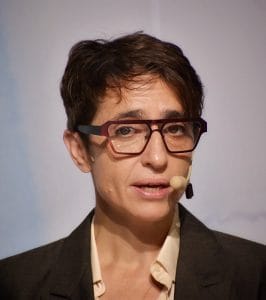
Prominent Russian journalists like Ilya Barabanov, Kirill Martinov, Masha Gessen and Mikhail Zygar, have been forced to build lives and careers elsewhere. In some cases, entire media platforms shifted abroad under threat of prosecution. Dozhd (TV Rain), once the largest independent news channel in Russia, interviewed figures like Alexei Navalny, Boris Nemtsov, and other opposition leaders, covered protests, and discussed corruption and police violence. It now broadcasts from the Netherlands.
Olga Churakova, a former investigative journalist for Proekt Media, an independent Russian media outlet, emigrated in 2022. She says working in Russia is hard, but it is not easy to go into exile either.
“In Russia you are under constant pressure from the authorities,” she says. “You face the constant impossibility of doing your job calmly, the risk of criminalisation, the risk of persecution. In emigration you face domestic problems: the impossibility to live a normal life in peace, because you have no chance to fail, not to work, to roll everything back, to go back to your mum’s dacha”
“We know where you are.”
In Cuba, the Communist Party of Cuba has never allowed independent media to exist legally. Since the 60s, many independent journalists have also been forced into exile. More recently, some were able to survive during a period of détente in relations with the US, but another escalation with the Trump administration left the independent media with two options: close down or leave.
José Jasán Nieves Cárdenas has been working in exile since 2019. In 2014, Nieves founded El Toque, a Cuban news outlet that supported human rights, citizen empowerment and political participation. Following his emigration, Nieves has found a different approach to his work. He connects with local communities via social media. This way, he can stay on top of the main issues back home and cover problems of Cuban people from exile.

The El Toque team also helps its compatriots from abroad via a project that helps people sell and buy foreign currency. Cuba’s central bank does not publish the exchange rate, so El Toque has created an AI tool that tracks exchanges in real time and publishes them on its magazine website.
Even abroad, journalists can’t be sure of their safety. Recently, two journalists, Christo Grozev and Roman Dobrohotov, were the target of an assault by Russian Intelligence, but British police detained the alleged criminals before they put the plan into action. Nieves has also experienced what it’s like to be threatened by your own government when you’re in exile.
“Some agents of the Cuban government went in front of my house, filmed my house, sent that to me in a video through WhatsApp and said, ‘we know where you are, and we know how to reach you’,” Nieves says. “That’s the kind of thing that the Cuban government keeps doing even if you are in exile.”
However, attacks on journalists in exile by security services are not so frequent. Typically, regimes focus more on pushing out the remaining independent journalists from the country, rather than persecuting those who have already left.
“Hello, you are a foreign agent”
Sonya Groysman and Olga Churakova were among the first Russian journalists to be branded as foreign agents by the Russian government in 2021. This status means that the government believes they are under “foreign influence” or receiving money from foreign sources to harm Russia. It prohibits them from advertising, teaching, making money in Russia, running for office and more. There are currently 974 people labelled as foreign agents in Russia, including politicians, youtubers, journalists and NGO representatives.

Now, Groysman and Churakova are working on a podcast called Hello, you are a foreign agent. They say it is “for everyone and about everyone who also feels a little like a foreign agent — no matter in Russia or abroad”. In one of the seasons ‘Cестры’ (‘Sisters’), they talk about Russian women whose brothers went to war.
Russia’s official reason for recognising the pair as foreign agents was their reposts of other foreign agent media. However, the pair believe it is related to their investigative work for Proekt Media. Over the years, the platform has investigated topics like the children that Putin is hiding from the public, his mistress, Alina Kabaeva, as well as the crimes of the ex-leader of PMC "Wagner" Yevgeny Prigozhin, who attempted a coup in 2023, and many other state secrets.
“Once you are designated a foreign agent, silence is key to removing the label,” Groysman says.
“In order, we assume, to be unlabelled, you must stop being a journalist, stop publishing anything at all … for a few years. Then there is that chance.”
Leonid Spirin is the editor-in-chief of Russian opposition media Groza, which targets a student audience. He emigrated soon after Russia declared war on Ukraine in 2022. He says he has become accustomed to the conditions, but the challenges remain.
“Emigration has been going on for three years now. Everyone has long since gotten used to it. Of course, it’s not easy when you don’t see your readers and don’t see what they live through, but we try to communicate with them.”
No country is protected
For most journalists who have been exiled, their work has contributed to either maintaining or fostering democracy at home. Over the last decade, alarm bells have been ringing around the world about the rise of autocracy. According to The Economist’s democracy index, the level of democracy around the world is the lowest since 2006. Only 6.6 percent of the world’s population lives under a full democracy. Nieves, who lives in the US, believes that the rise of autocracy can happen to any country.
“It’s always a red flag when you see so much call to the personality of the leader, you know, so much praising of the leader as somebody that doesn’t make mistakes. That’s a red flag, because that will increase the lack of accountability on that leader.”
Spirin believes that independent media can help maintain democracy, but that requires more than just not taking money from affiliated sources. Readers themselves need to help the media stay independent.
“If the media publishes something that you don’t like ideologically, it’s important to read whether it’s true or not,” he says. “Okay, you may not like the truth. That’s fine. You shouldn’t unsubscribe because of that. You should make sure that they are posting the truth and support those who are writing the truth.”
“Otherwise, there will be no independent media left,” he says.
“And still there will be nothing to read, to understand, to learn, and so on. Everyone will remain in their own bubble, and that’s bad.”
Homeland or profession?
Deciding to work in exile means you lose your home. You can’t return to your loved ones and the town you grew up in. But for many journalists who decided to go into exile, to be able to carry on their work independently is more important.
“It’s a very hard choice, and God forbid anyone should have to make that choice. There’s just no right answer,” Spirin says.
For him, it became a decision of “homeland or vocation?”
“Well, it turned out that my profession was more important to me. It’s not good or bad, but it’s just the way it is. I realised that it is more important for me to talk about what is going on than not to talk about it, but to stay in Russia.”
“Absolutely anything else in life, any profession, will seem less meaningful and less significant than this one.”