
Sometimes it’s the “wrong people dying”. Why some military conflicts go unseen.
This story was originally published on Upstart on October 31, 2025.
From February 2022, the Russian war in Ukraine dominated global media. Then, two years ago, the war in Gaza began, and almost every day since, the news has been dominated by stories from both conflict zones. Endless Australian coverage has reported who has advanced where, how many civilians have died or fled, and how the international community has reacted to what happened on the battlefield.
But many conflicts go on for years, where people continue to die and flee, that don’t appear in the headlines.
According to Vision of Humanity there are currently 59 ongoing conflicts worldwide, including civil wars, coups and terrorist activity. That’s the biggest number since the Second World War. In 17 of these conflicts, more than a thousand people died in 2024 alone.
Dr Mohammed Dan Suleiman is a social scientist whose work focuses on the conflicts in the Sahel, a geographical area that runs from Senegal to Eritrea, south of the Sahara, and includes Mali, Burkina Faso, and Niger. Here, conflicts have been ongoing since the region gained independence in the 1960s. Islamic State [ISIS] and Al’Qaeda are active in the area. In 2024, 51 percent of terrorism-related deaths in the world occurred in the Sahel.


Suleiman tells upstart that global media located in the Global North, a group of wealthy and industrialised countries, like the European Union, the United States of America and Australia, are too far away from Sahel and other regions where most of the wars are happening. So are their audiences. That shifts their focus.
“These things come together to determine whether the conflicts in Sudan or in the Sahel are underreported or overreported,” he says. “In this instance, they are underreported because the actors involved are not as important to the international community…”
Newsroom factors like audience, reach, and estimations of newsworthiness impact how and if global events are reported in Australia. When choosing what to report, editorial staff and journalists consider factors like how close their audience is to the nation where the event took place, both culturally and geographically. And when choosing international stories, we tend to see news from the same nations that Australia has close cultural or political ties with. For example, when there were massive floods in Pakistan earlier this year with at least 900 people died, it received significantly less coverage in Australia than the floods in Texas in June that killed 135 people.
The news cycle moves fast, and what has recently been reported all over the media can be forgotten just within a few weeks. Sometimes media initially report conflict, but if the situation remains the same for a long time, they tend to forget it in favour of new or more newsworthy conflicts. This happened to Myanmar where war has been going on for many years. In 2021, the military junta took power, overthrowing the elected government and the Nobel Peace Prize-winning prime minister. A video of a fitness instructor doing a workout session while military cars were heading to the parliament building went viral, sparking coverage. Then the situation in the big cities stabilised, and the junta prohibited foreign media from working in the country. Anti-coup protesters violently clashed, and some people went to the jungles to join the guerrilla.
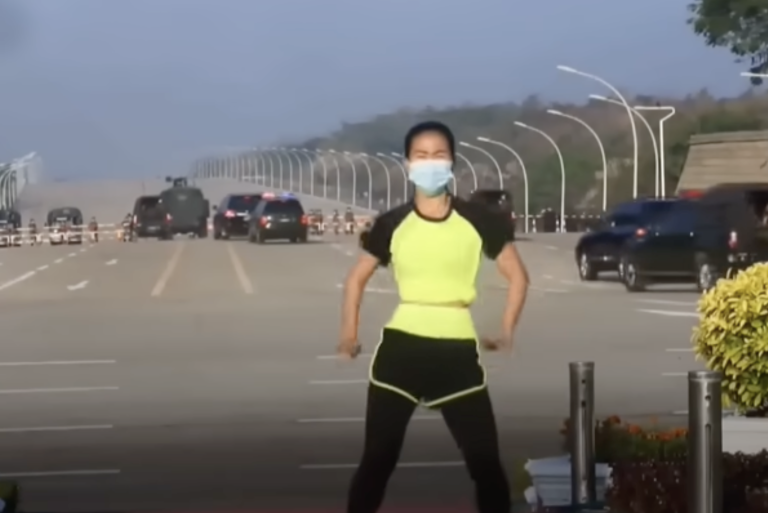
By the end of 2024, the UN reported that over three million people were displaced. 149,000 people had become refugees in bordering countries, and at least 75,000 were killed, including 5,350 civilians. Now, what happens in Myanmar goes largely underreported in Australia and other Western countries.
In some areas, wars can also seem to be a permanent state of affairs. Africa is often associated with news of famine, war crimes and coups. Christine Caldera, managing editor, senior researcher and advocacy officer at the Global Centre for the Responsibility to Protect [GCR2P] says that for some conflicts, the issue of media fatigue might contribute. For example, the conflict in the Democratic Republic of Congo has been going on for around 30 years. People who saw reports about it as teenagers could now have their own grown-up kids, and yet the situation there seems to have remained the same.
“It’s kind of hard, I imagine, for media to be like ‘okay, well, let’s provide coverage on this, knowing that people may not engage with the content’,” she tells upstart.
The GCR2P is one of many NGOs trying to report on and advocate for countries whose population is at risk of continued conflicts and war. Sarah Hunter, senior research and advocacy policy officer in the GCR2P, specialises in Ukraine, the Horn of Africa and Myanmar. She says the difference between the media coverage of these conflicts is the proximity of the communities. For example, there’s a huge Ukrainian diaspora in Europe and in the US, so for people there, it’s easier to sympathise with what is happening in Ukraine. However, “they might not feel the same way about people from Ethiopia or people in Myanmar”.
“It’s kind of a far-off place,” she says. “There’s been war in both areas for decades. People have heard about the wars and the conflicts, especially Southeast Asia is framed in terms of the war in Vietnam.”
As American journalist and professor Susan Moeller once said, “Sometimes millions die, but in a news sense they are the wrong people dying in the wrong places for the wrong reasons.”
Empathy fatigue is another issue. Reading the news from only two wars is depressing enough, but following reports from all the ongoing conflicts is nearly impossible. Even though Caldera thinks reporting on all wars would be ideal, she doesn’t see this happening.
“Just monitoring the countries that I do for work and then trying to just read domestic news for my own information and knowledge, it’s incredibly overwhelming, just the kind of amount of information that’s out there,” she says.
Many wars are considered notable enough as they are and are reported because of the part they play in other global conflicts or narratives. The ongoing conflict in Mali, which is a part of the Sahel, is an example. This is a very complicated conflict with many radical groups, government forces, and international stakeholders involved. Suleiman says reporting from both sides would be better, but some events remain underreported because they don’t align with the narrative people are used to seeing in the media. He gives an example of the Kidal offensive in 2023, when the Malian army, alongside Russian mercenaries "Wagner", took over the rebel stronghold of Kidal.
“Because when you report such positive pro-regime and pro-Russia activities, then it discredits the narrative that Russia is there to form struggles,” he says. “It’s not to say that Russia is there to do good.”
Caldera says Western media often focuses on the foreign influence in the region, like the actions of the Russian military company Wagner in the Sahel.
“That just kind of complicates the response and is not necessarily helpful when you’re just focusing on those geopolitical shifts rather than actually taking action,” she tells upstart.
Suleiman also thinks this is why people in countries like Mali, Burkina Faso and Niger dislike Western media. For them to trust the reports of Western media, he thinks they should work with local journalists, and they “must be seen to be unbiased”.
Despite the challenges of gaining attention, Caldera says she continues working because of the small victories they achieve.
One such small victory for Hunter was helping make the world aware of the Tigray war in Ethiopia, which resulted in 600,000 people dying between 2020 and 2022. Hunter recalls spending 406 days drawing attention to Ethiopia at the Human Rights Council, which resulted in the Council investigating the atrocities happening there.
“So as crappy as things can be on a day-to-day basis, there is some good, and I do see that our work does matter and has made a difference,” she says.

The media hold the power to help as well as hinder the resolution of conflicts. In Rwanda, the genocide against the people of Tutsi began in 1994. This was, to a great extent, because of a propagandistic nationalist broadcast transmitted by Radio Libre des Mille Collines (Free Radio of the Thousand Hills). But Suleiman says media coverage later helped to resolve the conflict by showing the consequences of the genocide. It attracted global attention and resulted in the UN peacekeeping mission returning to the country.
“The moment dead bodies showed up on television screens, and we heard exactly what was happening, then just the horror of what people were seeing from the reportage caused the UN to actually go back in, to actually restore order,” he says.
But in general, Suleiman says the media alone can’t do much. It can “open up the local to the global so that those global actors can then act”. But he doesn’t recall any other conflict apart from in Rwanda, where the media played a key role in de-escalation.
Hunter still believes media coverage is important because “anything can be prevented just as easily as things can be started”.
Now, there are many monitoring mechanisms. News from all over the world is on our phones and is constantly updating. But Hunter says it’s still political powers who will decide whether conflicts are solved or not. This involves decisive action.
“But we still can’t overcome the issue of the political will to do so,” she says. “Trying to make a government not act in a realpolitik or a realist type way and actually go out on a limb to change something that they see coming, because they know it’s coming.”
Every year CARE International releases ten of the most severe humanitarian crises that don’t make headlines. Below is the list for 2024:
Angola – 2.2 million people in need of humanitarian aid.
Central African Republic – One in five people are displaced.
Madagascar – More than 80 percent of people live below the poverty line.
Burkina Faso – Acute hunger affects 2.7 million people.
Burundi – 52 percent of children under the age of five are chronically malnourished.
Mozambique – 2.8 million people do not have enough to eat.
Cameroon – 60 percent of the population has no access to clean water.
Malawi – 40 percent of the population suffers from extreme food shortages.
Zambia – 9.8 million people are affected by drought.
Niger – 4.5 million people need humanitarian aid.